
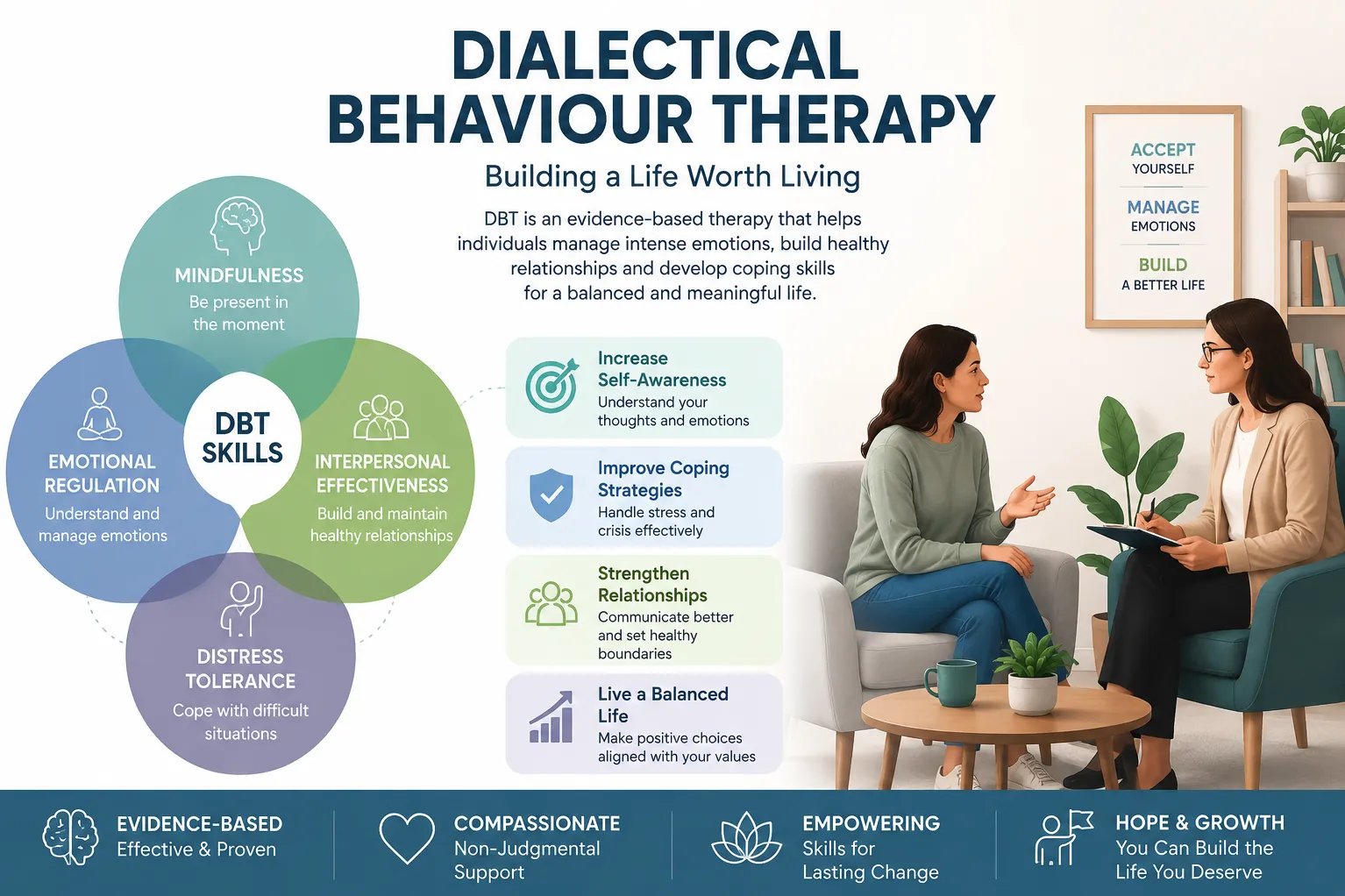
People who experience emotions intensely are often told to calm down, think positively or stop overreacting. Such advice rarely addresses the underlying difficulty. Dialectical Behaviour Therapy, commonly called DBT, offers structured skills for handling powerful emotions, impulsive reactions and unstable relationships.
Dr Milan Balakrishnan may consider Dialectical Behaviour Therapy as part of a broader psychiatric plan for suitable patients in Mumbai. DBT is not simply supportive conversation. It is a skills-based form of psychotherapy that balances two ideas: accepting the present experience and working towards meaningful behavioural change.
Who May Benefit from DBT?
DBT was originally developed for people with borderline personality disorder, particularly those experiencing severe emotional instability and self-harming behaviour. Its principles may also be adapted for certain people dealing with:
- Repeated emotional crises
- Impulsive or self-destructive actions
- Intense fear of rejection or abandonment
- Unstable interpersonal relationships
- Difficulty recovering after conflict
- Chronic feelings of emptiness
- Suicidal thoughts or self-harm
- Certain eating or substance-use problems
- Anger that feels difficult to control
A person does not automatically require DBT because they are emotional or have relationship difficulties. A psychiatric and psychological assessment helps determine whether this structured approach suits the actual problem.
What Skills Are Taught in DBT?
Dialectical Behaviour Therapy generally focuses on four core skill areas.
Mindfulness
Mindfulness helps individuals observe their thoughts, emotions and surroundings without immediately reacting. It builds awareness of what is happening in the present moment.
Distress Tolerance
These skills are designed for difficult situations that cannot be solved immediately. The goal is to survive a crisis without making it worse through impulsive behaviour, substance use, aggression or self-harm.
Emotion Regulation
Patients learn to identify emotions, understand what triggers them and reduce vulnerability caused by factors such as poor sleep, irregular routines or prolonged stress.
Interpersonal Effectiveness
This area focuses on expressing needs, setting boundaries, managing disagreement and protecting self-respect within relationships.
DBT Compared with Standard CBT
Cognitive Behavioural Therapy often focuses on recognising and changing unhelpful patterns of thought and behaviour. DBT uses several cognitive and behavioural methods but gives additional attention to acceptance, emotional regulation and crisis-management skills.
Neither therapy is universally better. CBT may suit conditions such as anxiety, depression or OCD when applied using the relevant clinical protocol. DBT may be more appropriate when emotional dysregulation, impulsivity and recurrent crises are central concerns.
Accessing Dialectical Behaviour Therapy in Mumbai
Patients from Breach Candy, Kemps Corner and nearby parts of South Mumbai may need to consider whether they can commit to regular sessions and practise skills between appointments. DBT is an active treatment. Progress depends on applying skills in real situations rather than discussing them only during therapy.
A comprehensive DBT programme may include individual sessions, skills training and support for applying techniques during difficult moments. The exact format can vary according to clinical need and available services.
Medication may still be used when a coexisting psychiatric condition requires it, but medication does not replace the behavioural skills taught through DBT.
If intense emotions, recurring relationship conflicts or impulsive actions are interfering with daily life, arrange an assessment with Dr Milan Balakrishnan. The consultation can help determine whether DBT, another form of psychotherapy or a combined treatment approach is more suitable.
Keywords