
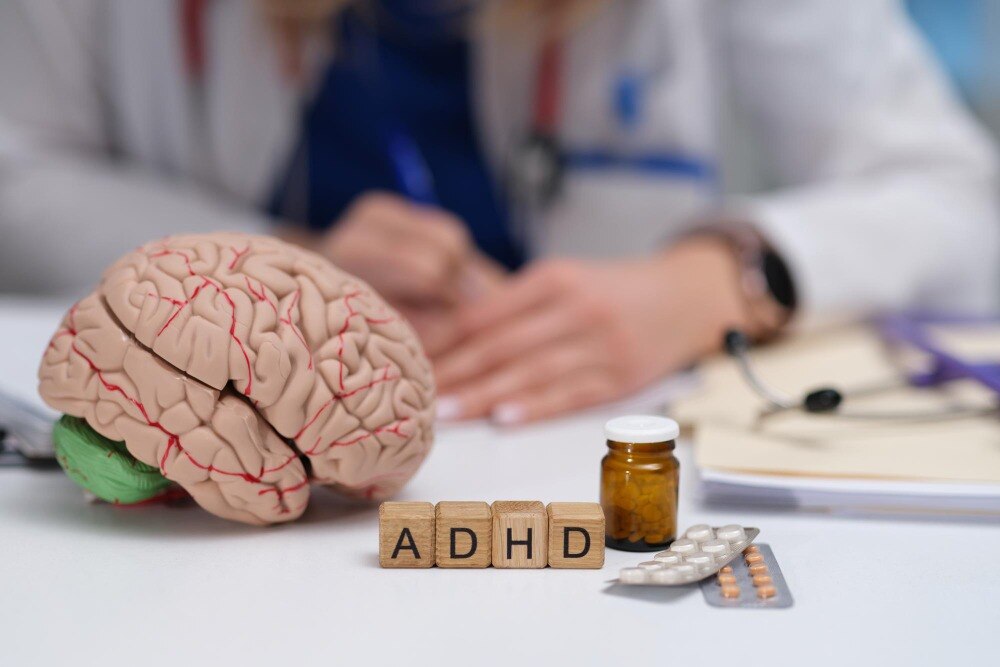
Effective ADHD treatment starts by identifying which difficulties are caused by ADHD, which are caused by another condition, and where impairment appears in daily life. By the end, you will be able to compare medication, psychological treatment, coaching and practical supports, then understand how clinicians choose and adjust a treatment plan for children, teenagers and adults.
Key takeaways
- Confirm persistent symptoms, childhood onset, impairment and difficulties in two settings.
- Choose medication, psychological treatment or combined care based on symptoms and daily impairment.
- Titrate ADHD medication gradually while monitoring benefits, side effects, blood pressure and pulse.
- Use written routines, reminders and task breakdowns to support focus and organisation.
Assessment Comes Before Choosing an ADHD Treatment
A clinician should confirm that ADHD symptoms are persistent, began in childhood, occur as symptoms in two settings, and cause meaningful impairment before recommending treatment.
An ADHD assessment should combine an interview, rating scales and collateral information from a parent, partner, teacher or employer; a score alone cannot distinguish ADHD from stress, sleep loss or another disorder. The clinician should take a developmental history and review psychiatric, medical, medication and substance-use history.
Before recommending medication, confirm:
- Current school or work impairment and the environmental changes already tried.
- Sleep quality, anxiety, depression, mood elevation, psychosis, tics, autism and learning difficulties.
- Height and weight for children and teenagers, plus pulse and blood pressure.
- Fainting, exertional chest pain, palpitations, heart disease and a family history of sudden cardiac death.
- Whether significant coexisting illness or substance-related risk needs treatment first.
| Finding | What to establish | Why it changes treatment |
|---|---|---|
| Symptoms | Persistence, childhood onset and impairment | Prevents treating normal variation or another condition as ADHD |
| Physical safety | Cardiovascular and psychiatric risk | A routine ECG is unnecessary unless history or examination identifies cardiac risk |
| Coexisting conditions | Sleep disorder, anxiety, depression, bipolar symptoms, psychosis or substance misuse | The clinician may treat the other condition first or avoid stimulants |
| Collateral evidence | Reports from family, teachers or employers | Shows whether difficulties occur beyond one environment |
How Treatment Changes for Children, Teenagers and Adults
For a five-year-old, ADHD treatment for children involves parent involvement because adults manage medicines, routines and communication with school. NICE recommends methylphenidate for children aged five and older when symptoms still cause significant impairment after environmental changes have been tried and reviewed.
Parent-training and classroom behaviour strategies can improve functioning, but severe symptoms may still require medication alongside them.
| Age group | What changes the plan | Practical focus |
|---|---|---|
| Children | Parents provide consent and report effects; clinicians track weight and growth | Home routines, classroom support and medication monitoring |
| Teenagers | The young person takes a larger role in consent and decisions; privacy and parent involvement must be balanced | Homework, sleep, peer conflict, driving safety and growing independence |
| Adults | The patient usually gives consent and manages treatment directly | Work demands, finances, relationships, driving, substance-use risk and pregnancy planning |
ADHD treatment for teenagers must account for missed doses, appetite loss, sleep difficulty and the risks of sharing or misusing medication. ADHD treatment for adults must fit around work schedules and responsibilities; a medicine that improves attention may not fix time management or impulsive decisions.
Set explicit targets, such as arriving on time or completing assignments, then review both symptoms and real-world functioning. Check pulse and blood pressure after dose changes and at set intervals; follow weight and growth in children and young people.
Anxiety, depression, bipolar symptoms, psychosis, substance misuse, sleep disorders and tics can change treatment order and medication safety.
Medication, Psychological Treatment or Combined Care?
Medication can reduce core ADHD symptoms, but it does not automatically teach organisation, time management or relationship skills. The practical differences are clearer when you compare what each option changes and how quickly it works.
| Option | Practical difference | Main trade-off or use |
|---|---|---|
| Stimulant medication | Often works quickly and can cover part or most of the day, depending on the formulation. | Appetite loss, sleep difficulty, rebound symptoms and misuse risk require dose, timing or formulation changes. |
| Non-stimulant medication | Takes longer to assess and provides steadier coverage for some people. Atomoxetine is one option; guanfacine is another. | Atomoxetine can cause stomach symptoms, reduced appetite or sleep effects. Guanfacine can cause sedation, low blood pressure and a slow heart rate; do not stop it abruptly. |
| Psychological treatment | Structured cognitive behavioural therapy can target planning, emotional regulation, coping and residual symptoms. | It requires regular active practice and does not replace medication for everyone. |
| ADHD coaching | Turns goals into routines, reminders, accountability and workable systems for daily tasks. | It is practical rather than a treatment for core symptoms. |
| Skills training | Teaches specific methods for breaking tasks down, estimating time, prioritising and managing distractions. | Skills fade without repetition and environmental support. |
| Combined care | Pairs medication with therapy, coaching, skills training or workplace and educational adjustments. | It takes more time to coordinate, but addresses symptoms and their daily consequences together. |
Ask for combined care when medication leaves important impairments unresolved, or when psychological and practical strategies are needed to make improvement last.
What ADHD Medication Titration and Monitoring Involve
A clinician starts with a low dose and increases it gradually during ADHD medication titration. For children and young people, methylphenidate is usually the first option; adults may start with methylphenidate or lisdexamfetamine after environmental changes have been tried and significant impairment remains.
The prescriber adjusts one variable at a time, using your symptom control and daily functioning—not simply a higher dose—as the target.
Before treatment and during dose changes, monitoring checks:
- Focus, task completion, organisation, impulsive decisions and the duration of benefit
- Appetite, weight, sleep, headaches, mood changes and irritability
- Pulse and blood pressure, including blood pressure monitoring after dose changes and at planned intervals
- Height and growth in children and teenagers
- Consistent use, missed doses, misuse risk and effects on school, work or driving
A routine ECG is not needed unless the cardiovascular history or examination identifies a reason for further assessment. Reduced appetite or insomnia may improve after changing the dose, timing or formulation; persistent weight loss, fainting, chest pain, severe mood change or troubling palpitations needs prompt medical review.
If stimulants are ineffective or poorly tolerated, atomoxetine is an alternative; gastrointestinal symptoms, appetite reduction and sleep effects remain possible. Guanfacine can cause sedation, low blood pressure and a slow heart rate, so do not stop it abruptly.
Dr Milan Balakrishnan can use follow-up to distinguish inadequate symptom control from side effects or another condition affecting concentration. Review treatment at least annually, with a planned dose reduction or stop trial when clinically appropriate.
Related services
Adult Psychiatry treatment involves a variety of approaches to address mental health disorders in adults. View service → |
Child and Adolescent Psychiatry Child and Adolescent Psychiatry Child and adolescent psychiatry is a specialized field of psychiatry that focuses on the diagnosis and treatment of mental health disorders in... View service → |
Targeting Focus, Organisation and Impulse Control in Daily Life
Missed deadlines and unfinished tasks need external structure, not motivation alone. ADHD organisation strategies support executive function by moving reminders, priorities and time limits outside your head; medication can improve attention, but it will not automatically create a workable routine.
- Break each task into a visible next action, such as “open the document” rather than “finish the report”.
- Use one calendar, one task list and alarms for starting, switching and stopping; estimate time, then add a buffer.
- Work in short timed blocks with a defined finish point, and remove the phone or website causing distraction.
- Use ADHD coaching for planning, accountability and routines; review what failed without treating the failure as a character flaw.
- Use cognitive behavioural therapy for ADHD to challenge all-or-nothing thinking, practise emotional regulation and pause before impulsive decisions.
- Ask parents, teachers or employers to provide written instructions, deadline reminders, quiet work areas and brief progress checks when appropriate.
| Option | Main target | Practical use |
|---|---|---|
| ADHD coaching | Planning and follow-through | Build weekly routines, prioritise tasks and review missed commitments |
| Cognitive behavioural therapy for ADHD | Emotional reactions and residual symptoms | Identify triggers, rehearse coping responses and slow impulsive choices |
| Behavioural and environmental support | Daily functioning | Use classroom plans, parent-training methods, visual schedules or workplace adjustments |
Choose targets you can measure: assignments submitted, appointments attended, arguments interrupted or purchases delayed. If attention improves while organisation or impulse control does not, tell the clinician; the treatment plan needs review rather than assuming you need more effort.
Frequently asked questions
What must an assessment confirm before ADHD treatment begins?
A clinician should confirm persistent symptoms, onset during childhood, symptoms in two settings and meaningful impairment.
How does ADHD treatment differ for children, teenagers and adults?
Treatment is adapted to age, development, school or work demands, family involvement, coexisting conditions and the person’s level of independence.
Is medication or psychological treatment better for ADHD?
Medication, psychological treatment or combined care may be appropriate; the choice depends on symptoms, impairment, preferences and treatment response.
What happens during ADHD medication titration?
A clinician adjusts the dose gradually while reviewing focus, organisation, impulse control, sleep, appetite, mood, blood pressure and pulse.
What daily strategies can improve ADHD symptoms?
Use written routines, reminders, visual schedules, short task blocks, environmental changes and one-step task breakdowns.